
To anyone with years of working in commercial retouching under their belt, the terminology comes naturally, but each of us remembers a time when the language of the industry wasn’t quite so clear.
When speaking to an art director who might be interested in hiring you, it’s important to speak his or her language.
Clear communication and understanding between you and your client instill trust, help you deliver exactly what the client wants with fewer revision rounds, and give your client the confidence that he hired the right talent.
If you’re a skilled beginner retoucher looking to land your first commercial job, check out this quick guide to some common industry terminology and conduct your client correspondence with confidence.
🎯 Julia Kumzenko McKim (JKM), commercial beauty photographer & retoucher, and RA founder, will sprinkle her notes along the way as well.
Example Email Exchange:
Let’s look at a mocked-up email exchange and throw in some key terms (all explained at the foot of this article).
Below is an example of an email one might receive as a retoucher:
Hi there,
We have a beauty shoot of 6 images that we’ll need retouched for our brand advertorial in Y Magazine. We should have the selects by this upcoming Thursday. Can you give me a rough idea of your availability for next week?
Regards, Z
🎯JKM: For my Avenue team and me, this is often a new product launch campaign (more creative, often with artistic color-grading) or an eComm project (cleaner, pleasant but true-to-life colors), where the files are to be used on the client’s website product pages and in the new product launch promotional materials, such as a newsletter, social media posts, and other marketing channels.
Now, this email might have been sent out to a few retouchers, and if your reply is late, unimpressive, or simply less impressive than another response, you may not be the one getting that job.
Giving the client just enough information to satisfy their request isn’t enough to engage them in a progressive dialogue, and certainly isn’t enough for you to understand the scope of the project, and of course, how to deliver an accurate quote.
Let’s take a look at an example response:
Hi Z,
Thanks for getting in touch! I have availability next week and I’d love to be on board.
Do you have a moodboard/references of the shoot? Or maybe you could send across a couple of the possible selects that’d be great.What’s the ideal turnaround?
If I can get the selects and the brief/markups on Thursday, I’ll aim to deliver a first draft by Tuesday for any revisions and we should have plenty of time for final amendments.
Regards,
X
Now that might be too many questions for one email, so I wouldn’t recommend it as a template. Consider it a buzzword-filled example of some of the information you’ll need early in the course of your exchange with a potential client.
Essentially, it’s a matter of knowing what to ask for to assist you in providing a great product, and in doing so, presenting yourself as a professional service provider whose understanding of the process will make your client’s experience of using your service a pleasant one.
There are few things more satisfying in a creative industry than realizing that your new team member ‘gets you.’
It’s a fantastic feeling, and that’s something you want your clients to have.
So if you’re looking to build trust and rapport with big commercial clients, you’ll need to know at the very least the terms listed below.
There are many more, we have compiled a larger collection of industry terms in our Pro Beauty Retouching video course.
A Quick Glossary
Brief
This is your guideline provided by the client. The brief is any and all information related to your role in the process and may include instructions to follow a particular style (see references), remove, or fix particular elements.
The brief comprises all written or spoken instructions before you begin and may be supplemented by mood boards and references.
🎯 JKM: Don’t make the mistake that many beginners make and rely on your memory while retouching. Keep the brief notes in front of you and cross-check the list before returning the files to the client. It is extremely unprofessional to be reminded of the same things that were already given to you before a retouching round.
Selects
The shots chosen by the client for the campaign. This can be as few as two or three shots from hundreds taken, or many more for a lookbook or e-commerce (JKM: product pages on your client’s website or other retail stores where your client’s products are sold, for example, Sephora, Bloomingdale’s, etc.).
Most shots taken on the day will remain largely unseen and unpublished, but it’s worth asking for additional files if you feel that one of the unselected shots could be beneficial, as an element for a composite, for example, or to replace a part of the image that is out of focus.
Mood Board
Often, an early stage in the process of the shoot involves collecting reference shots as an aid to the photographer. It can be helpful to ask for a PDF of this to get an idea of the desired look for the finished shots, particularly if the selects are not finalized or haven’t yet been shot.
It’s often an enormous benefit to see what the client had in mind as a final vision or what the photographer was aiming to create.
Mark-ups
Often sent as JPEGs (when working on-site, you can be given hand-annotated proofs), a markup is a version of a select with notes and marks indicating changes the client expects.
PROFESSIONAL BEAUTY RETOUCHING COURSE
 This course is a hands-on guide for photographers and retouchers to learn beauty retouching at a professional level.
It is especially valuable for freelancers interested in working in the higher echelon of the market, whether by offering retouching services to commercial clients, pursuing senior in-house retouching roles, or managing post-production workflows and interfacing with photography and retouching vendors on behalf of clients.
🎁 Comes with a Retouching Vocabulary and a Retouching Job Application Checklist.
Also available as a part of the All-in-One Beauty Retouch and Beauty Retouch course bundles.
Turnaround
The time taken to deliver the final product. The client will expect you to ‘turn around’ the project before an agreed deadline.
🎯 JKM: It is not our place to tell you how to run your business, but for us, the deadline that we agreed to (when we saw the selects) is set in stone. If it turns out that the images require a lot more work than we estimated, we will sleep less and work more, but we will not delay the promised submission date. However, in unique situations, once you realize meeting the deadline is just not feasible, reach out to your contact person as soon as you can. Explain the trouble you are facing and try to re-negotiate the final delivery date. Remember that there are other departments whose timelines are dependent on the due date for the retouched images, as well as the product launch date itself, so this should be done only in critical situations, if you want to keep this client.
References
Example shots (often found on the web) that capture the feel and style of retouching required by the client. The client will outline their requirements in the brief, but of course, ‘a picture is worth a thousand words’ and references are an ideal way to understand the client’s vision for the final product.
Drafts
Your first draft is the first delivery to the client of the retouched shots. These may be signed off on or marked up for revisions.
After completing the amendments, you will deliver a second draft. When the client is satisfied, you have a final draft. (Congratulations! Send that invoice!)
🎯 JKM: We usually add V1, V2 (as in Version 1, 2, and so on) to the end of file names that we send to our clients for review and feedback. Hopefully, after the V2 round, it is an FN (as in Final). But, yes, sometimes it can go up to V4 or even V… in complex retouching jobs. Typically, only a few files out of the entire project require that many revision rounds, and often that is caused by multiple levels of the review process on the client’s end, when the follow-up revision requests come from other departments. For example, makeup product colors need to be dialed in as requested by the Product Development department.
Sign-off
When the client is satisfied with the retouched shots, they are considered ‘signed off.’
The term suggests a signature from an Art/Marketing Director to indicate completion and readiness to be used by the marketing department.
Amendments/Revisions
Small changes that are requested after delivery of a draft. ‘Smooth shirt a little, remove this stray hair, and slightly less red in skin tones‘ are considered amendments.
A fully amended shot is considered a revision, and a round of revised shots is an updated draft.
In a lot of cases, I have seen the words revisions, amendments, and amends used interchangeably.
There’ll be regional and international variations to these terms, of course, and some terminology specific even to certain companies and departments, but the language outlined here is universal within English-speaking markets.
🎯JKM: Use the same words that your client is using in your correspondence with them, even if the majority of your clients use other words.
So, ask for references, agree on a turnaround, and submit your first draft for any revisions!
And remember, the more you understand and stick with the brief, the fewer revisions you’ll need to go through before that all-important sign-off. Every client will notice and appreciate that!
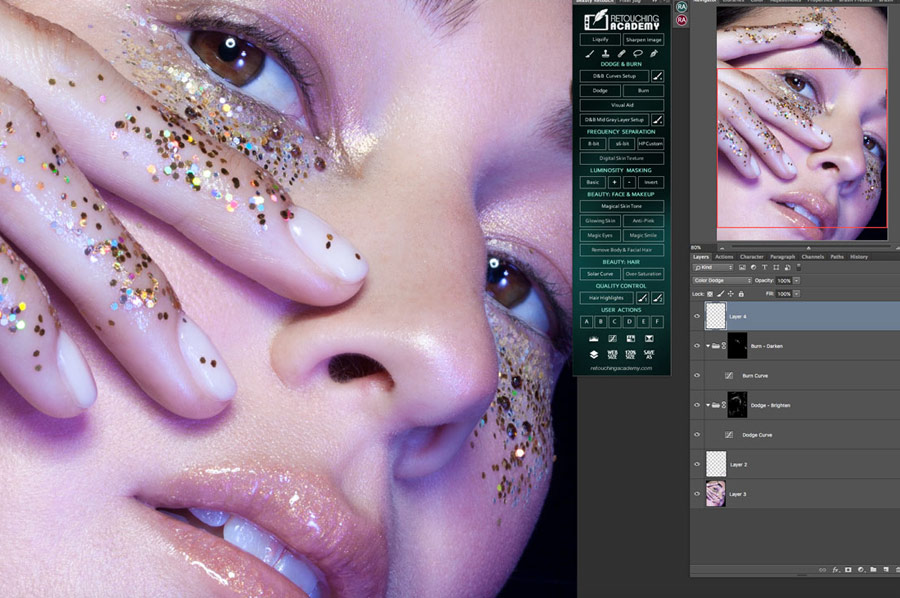
Image © Diego Alborghetti, Retouching by Daniel Meadows